A choreographer who works only with non-dancers.
For five years, every piece she has made has been made with people who never trained. The result is a body of work that — by her own account, and by ours — refuses every standard we usually bring to dance.
The choreographer — I will call her R., at her request — has been making work in south London for nearly fifteen years. The first decade was conventional in the sense that conventional dance work is conventional: trained dancers, studio rehearsals, set runs at small venues. She made, by her own account, about twenty pieces in that period, several of which received critical attention and one of which received an award she keeps in a drawer.
Five years ago, after a long period of dissatisfaction she finds hard to articulate, she stopped. She gave herself a year off and then, when she returned, made a single decision: she would no longer audition. She would no longer cast. She would no longer work, at all, with people who described themselves as dancers.
How she finds them
The new method is closer to recruitment than to casting. R. teaches an irregular series of workshops — sometimes through community centres, sometimes through libraries, occasionally through a friend who runs a sailing club — and she watches, and waits. When she finds someone whose attention she wants to work with, she invites them.
The invitation is loose. There is no contract, no audition, no formal arrangement. The performer commits to a period of work — usually six weeks, occasionally longer — and at the end of it, there is a piece. The performer is, almost without exception, paid less than they would be if they had a more conventional job, and more than dancers are usually paid for similar work.
"I am not interested," she said, "in the dancer's body. I am interested in the body of someone who has not been told what they look like."
The work itself
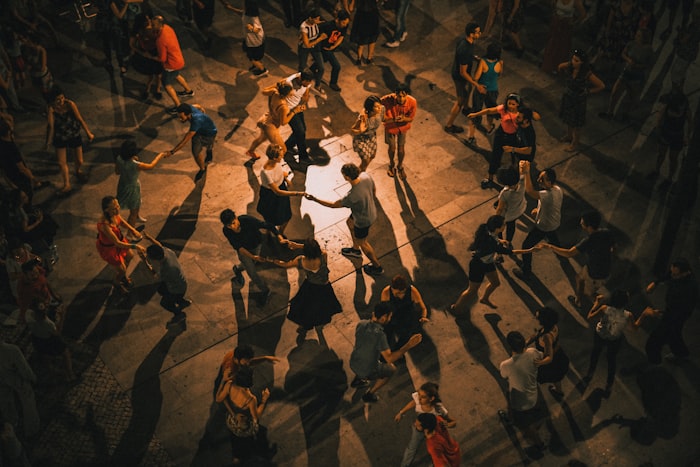
I have seen four of R.'s pieces, the most recent of which I watched twice in a week. They are difficult to describe, because the obvious vocabulary — phrasing, line, dynamics, ensemble — sits awkwardly on what is happening on stage. The performers do not move like dancers. They move like the people they are, in a heightened, attentive version of themselves. The choreography is not absent. It is folded so deeply into the performers' own movement vocabularies that it reads, to the audience, as their own.
This is, R. says, the point. "I am not interested in the dancer's body," she told me, when I asked her about it. "I am interested in the body of someone who has not been told what they look like. The work is to build a piece around that body, without breaking the thing I came for."
What it takes from her
This way of working is, R. acknowledges, slow. A piece typically takes between four and eight months. The early weeks are almost entirely conversation. The middle weeks are spent finding the small, repeatable movements that the performer naturally produces and that can be amplified, redirected, or — occasionally — broken open into something larger. The final weeks are conventional rehearsal: running, refining, repeating.
There are, she says, two failure modes. The first is when the performer becomes self-conscious and starts to "perform" — at which point the piece dies and has to be rebuilt. The second is when she, R., starts to choreograph too soon — at which point the performer becomes a vessel for her ideas, and the thing she came for disappears. Both failures, in her experience, happen routinely, and the work is largely about catching them early.
Who turns up
The performers have ranged, over the past five years, from a retired electrician in his sixties to a teenager who came to R. through her father, a friend. There is no demographic pattern. R. is alert to the risk that her selection criteria are, in fact, aesthetic criteria in disguise, and she watches herself carefully for the temptation to repeat a "type."
She is also alert to the risk that the work could become exploitative — that the performers are being used, in some way, for their non-trained-ness. Her precautions are practical: she pays them as performers, credits them as collaborators, and gives them an absolute right of refusal over how their image and movement are used after the piece closes. So far, no performer has invoked it.
What changes when they leave
Many of R.'s performers, after their piece closes, go back to their ordinary lives. A small number have not. Two have gone on to make their own work. One has trained as a movement director. One has continued to perform with R. across multiple projects, by mutual choice, and is now — paradoxically — close to being what R.'s old self would have called a dancer.
R. does not regret this. She points out, gently, that her method was never about avoiding dancers as people. It was about avoiding a particular kind of trained attention. If the trained attention develops slowly, in someone who wasn't shaped by it, that is — she says — fine. It is just no longer her territory.
Why it works
I have thought about this for a while. The best answer I can give is this: R.'s pieces are watched with a different kind of attention from most dance work because the audience cannot, easily, evaluate them against a standard. There is no virtuosity to admire, no technique to recognise, no comparison to draw against last week's piece by someone else. The audience is left with the performer's actual presence — which is, if she has chosen well, considerable.
This is rarer in performance than it sounds. Most theatre, most dance, most circus, is partly evaluated against a remembered or expected form. R.'s work refuses the form. What is left is harder to write about, and — when it works — much harder to forget.